Tuesday, October 8, 2013

Supplement Highlight: Nutrametrix OPC-3

Written by:  Erin Peisach, RD, LDN

OPC-3, which is short for oligomeric proanthocyanidins, is a highly bio-available, potent antioxidant supplement that is now offered for patients at our patient clinic. This exciting supplement is up to 20-times more powerful than vitamin C and 50-times more powerful than vitamin E in its antioxidant capacity. What exactly is in this supplement that makes it so effective? It contains a combination of bilberry, grape seed, red wine, and pine bark extracts, as well as citrus extract bioflavonoids. Not only will OPC-3 neutralize harmful free radicals in the body, but it may also help maintain joint flexibility, improve cardiovascular health, and reduce inflammation.

A 2008 study published in Angiology found that OPC-3 daily supplementation over a 2-month period lowered all major cardiovascular risk factors compared to a placebo. Blood pressure, total cholesterol, and fasting blood glucose were reduced, endothelial function was improved, skin microcirculation was enhanced, and C-reactive protein dramatically decreased by 52.1%.

This supplement comes in a powder that is mixed with water, creating an isotonic solution that is consumed on an empty stomach. Don’t worry…it tastes like grape juice! The science behind this form of supplementation is that the nutrition is highly bioavailable and immediately absorbed into the body, bypassing the need for high amounts of stomach acid or digestive enzymes. It is reported that some tablet supplements are only 10-40% absorbed compared to 90-95% absorption for isotonic supplements. In a 2009 study published in Phytotherapy Research, they found that the isotonic OPC-3 compared to the tablet OPC-3 significantly accelerated the bioavailability of flavonoids. At 10-minutes post-consumption, the isotonic OPC-3 significantly decreased the subjects’ reactive oxygen species six times greater than the tablet form and it remained significantly greater throughout a four hour period.

This safe, highly effective antioxidant supplement may provide numerous benefits to your health. Ask one of our clinicians about OPC-3 at your next visit and find out if it may be an appropriate supplement for you!  Call us at 410-448-6361 to schedule your next appointment or ask questions.

References:

1. Cesarone MR, Di Renzo A, Errichi S, Schonlau F, Wilmer JL & Blumenfeld J. (2008) Improvement in circulation and in cardiovascular risk factors with a proprietary isotonic bioflavonoid formula OPC-3. Angiology. 59(4), 408-414.


2. Cesarone MR, Gross MG, Di Renzo A, Errichi S, Schonlau F, Wilmer JL & Blumenfeld J. (2009). Accelerated antioxidant bioavailability of OPC-3 bioflavonoids administered as isotonic solution. Phytother Res. 23(6), 775-777.

Friday, October 4, 2013

Food Reactivity - Testing & Treatment

Did you know that our clinic specializes in food sensitivity testing and treatment? Erin Peisach, the clinic’s Registered Dietitian, is a Certified LEAP Therapist (CLT). What is LEAP? Quite simply, it is a diet program designed to help people suffering from food sensitivity symptoms. Symptoms can range from bloating, diarrhea, and excessive gas, to eczema, chronic migraine, fibromyalgia, irritable bowel syndrome, and chronic muscle and joint pain. The tricky part is trying to identify the food sensitivity that may be provoking these symptoms. Food sensitivities are dose-dependent, meaning small amounts of the food may not cause a problem, but larger amounts will. They can also have a delayed response in the body, meaning symptoms may not be experienced immediately after ingestion, but anywhere from 4 to 96 hours later. Because of these two factors, food sensitivities are extremely difficult to diagnose.

In the past, clinicians have helped patients try to identify food sensitivities by using a food elimination diet followed by a food reintroduction challenge. We call this the “guess and check” method because there is no sure-fire way to know that the diet is void of all reactive foods. For instance, one person may be sensitive to dairy, gluten, fish, peanuts, and citrus, some of the most common food triggers, while another person may be sensitive to rice, pears, lamb, and olives, some of the least common food triggers. Essentially, there is no perfect hypoallergenic diet for the entire population because each person’s body is unique.

Alternatively, some clinicians have used blood tesing to help diagnose food sensitivities, including ELISA IgG and ALCAT. While these tests can be helpful in identifying food triggers, they also have flaws. In particular, the IgG test exclusively quantifies the IgG response to specific foods and does not measure all of the other ways the body may react to a trigger food. Because of this limitation, the test results may show you that unsafe foods are actually safe.  As with any diagnostic test, it is important with food sensitivities to use a sensitive and specific testing method to guide therapy.

The LEAP program utilizes a test called Mediator Release Test (MRT).  Rather than relying on IgG, it measures the release of chemical mediators of food sensitivity symptoms by immune cells.  MRT is becoming the gold-standard test in the industry, with studies supporting its accuracy and reliability.


Erin uses the results of the MRT to put together an individualized eating program to improve your symptoms, heal your gut, and improve your health. Contact the clinic today by calling 410-448-6361 to schedule an appointment and find out if this is the right program for you. 

Friday, August 16, 2013

CIM's 2013 Health & Wellness Conference

"Gentle Yoga to Start the Day"
workshop led by Bonnie Tarantino, MFA
The University of Maryland Center for Integrative Medicine’s second annual Health & Wellness Conference was held on Saturday, May 4, 2013 at the Hilton Baltimore.  More than 350 health care professionals and lay people gathered to hear Mark Hyman, MD, doctor, author, and advisor to the Dr. Oz Show, speak about how society can influence health and how we can be a part of the wellness movement.  More than 20 leading experts in Integrative Medicine led workshop sessions throughout the day, and the lunchtime panel and plenary sessions rounded out the day, giving the audience the opportunity to interact with speakers.

Kevin Chen, PhD led a morning QiGong workshop outside
“It was a wonderfully executed conference,” said one attendee.  “Each session was better than the previous.  I look forward to attending next year and spreading the word about it to others.” 

From nurses, social workers and yoga practitioners, to physicians, pharmacists and therapists, to the general public, the Conference catered to the interests of health and wellness enthusiasts of all kinds.  This year, in addition to Continuing Education credits for many health care professions, the Conference offered a Pain Management track that was approved for Continuing Medical Education credits, drawing two-thirds more physicians than at the first conference.

Overall, 97% of attendees who responded to the post-conference survey reported that the Conference met or exceeded their expectations, and 56% said their main goal for attending the conference was to gain knowledge to share with others.  “I will share what I learned at the Conference with my patients when they press me for pain meds,” said one participant who asked to remain anonymous.

In a survey comment, another attendee wrote, “I felt uplifted at the Conference.  It was inspiring to see speakers and presenters who strongly projected their desire to help others.” 

Dr. Mark Hyman
More than 20 experts in health care and integrative medicine led workshops throughout the day on topics such as nutrition, meditation, yoga, spirituality, environmental health, Ayurveda, manual medicine, acupuncture, and more.  Participants were able to select one of three to five workshops from each of the four sessions and were united in one room for Dr. Hyman’s keynote lecture, the lunch panel on “Changing the Paradigm of Health Care,” and the plenary session addressing “Pain Management in the 21st Century” led by the Center’s Associate Director Dr. Delia Chiaramonte.

“Are the social threads that connect us as important as the genetic threads?” asked Mark Hyman, MD, doctor, author, Functional Medicine expert, and advisor to the Dr. Oz Show, in his keynote address “Social Ecosystems and Chronic Disease.”  Through his work, he has discovered that our social environment and connections can be a major influencer over our health.  In an inspiring presentation, Dr. Hyman explored how the community can be part of the medicine and part of the cure.

Jay Perman, MD, President of
University of Maryland, Baltimore
“All of us in healthcare need to embrace our partners across the professions if we are going to serve patients and serve the needs of the public properly,” said University of Maryland’s President Dr. Jay Perman in his remarks that introduced the lunchtime panel.  Moderated by the Center’s Director Dr. Brian Berman, a panel of health care visionaries came together to give the audience an intimate look at how they have seen and helped “Change the Paradigm of Health Care.” 

Panel (L to R):  Dinae Hoffmann, Thomas Scalea, MD, Brian Berman, MD, Lori Knuston, RN
Dr. Thomas Scalea, physician-in-chief of the University of Maryland R Adams Cowley Shock Trauma Center, stated, “It’s not so much about what it is we do – it’s about the total care package that we provide the people … we will continue to push the envelope that is about the total care of the patient and measuring the effect of what it is that we do.” 

Lori Knutson, RN, a nurse who helped make dramatic changes in the healthcare system in the Midwest, shared her story, and Diane Hoffmann, director of the health care law program at the University of Maryland Francis King Carey School of Law, addressed how political and legal changes affect health care, such as licensing practices.  Half an hour of questions from the audience gave participants a chance to interact with the panel.

Delia Chiaramonte, MD
In a post-lunch plenary lecture, Delia Chiaramonte, MD, Associate Director and Director of Education at the Center for Integrative Medicine, tackled the topic of “Pain Management in the 21st Century,” analyzing what we do and what we can do differently, such as looking at the whole person.  “We can’t really talk about pain, particularly chronic pain, without thinking about all kinds of things…like people’s emotions, their genetics, their social situations, like how happy they are in their life, the context of the pain…” said Dr. Chiaramonte.  A running theme throughout the 
day, Integrative Medicine takes a team approach and looks at the whole person – for better health and wellness.

Friday, June 14, 2013

What to do if you are bitten by a tick

WHAT TO DO IF YOU ARE
BITTEN BY A TICK
By:  Dr. Kalpana Shere-Wolfe, University of Maryland School of Medicine
If you are bitten by a tick you may or may not need to be treated based on the description of the tick and how long it has been attached.   
1. Remove the tick if you can following the instructions below:
a. Use fine tweezers to grasp the tick as close to the skin surface as possible.
b. Pull backwards gently but firmly, using an even, steady pressure. Do not jerk or twist.
c. After removing the tick, wash the skin and hands thoroughly with soap and water.
2. You do not need to keep the tick. Please note the following:
a. Its color and size
b. If it was attached to your skin or just resting on your skin
c. If it was big, round, and full of blood. 
3. You do not need to be tested for Lyme disease at this time.  Even people who become infected will not have a positive blood test until approximately two to six weeks after the tick bite.
4. If the tick was not attached, easy to remove or just walking on the skin, and was still flat, tiny and not engorged with blood  or not attached for ≥ 24 to 36 hours when it was removed it could not have transmitted infection.  In this case you do NOT need to be treated. 
5. You may need to be treated if the following are true:
a. The attached tick looks like an adult or nymphal  blacklegged (I. scapularis) deer tick.  Ticks that are brown and approximately the size of a poppy seed or pencil point are deer ticks. These can transmit Lyme disease. (See picture below for comparison with the dog tick or lone star tick.)
b. Tick is estimated to have been attached for ≥ 24 to 36 hours (based upon how engorged the tick appears or the amount of time since outdoor exposure)
References: CDC, IDSA Practice Guidelines for Lyme Disease


Tuesday, January 8, 2013

12 Days in India


Before the holidays, 14 Reiki masters embarked on 12-day adventurous and transformative trip to India, led by Bonnie Tarantino, Director of the Healing Pathways program here at the University of Maryland Center for Integrative Medicine.  Nurses from R Adams Cowley Shock Trauma Center at the University of Maryland, the University of Maryland Medical System, Johns Hopkins Hospital, and Walter Reed Hospital attended, and were joined by social workers, massage therapists and yoga instructors.  While there, the group received training in meditation, yoga and advanced Karuna Reiki.  

Many of the travelers say a highlight of the trip was attending the second international yoga conference at the Paramanand Institute of Yoga Sciences and Research.  More information about the conference can be found here:  http://www.paramyoga.org/inner.php?page_id=167&page_name=Second+International+Yoga+Conference&main_page_id=50

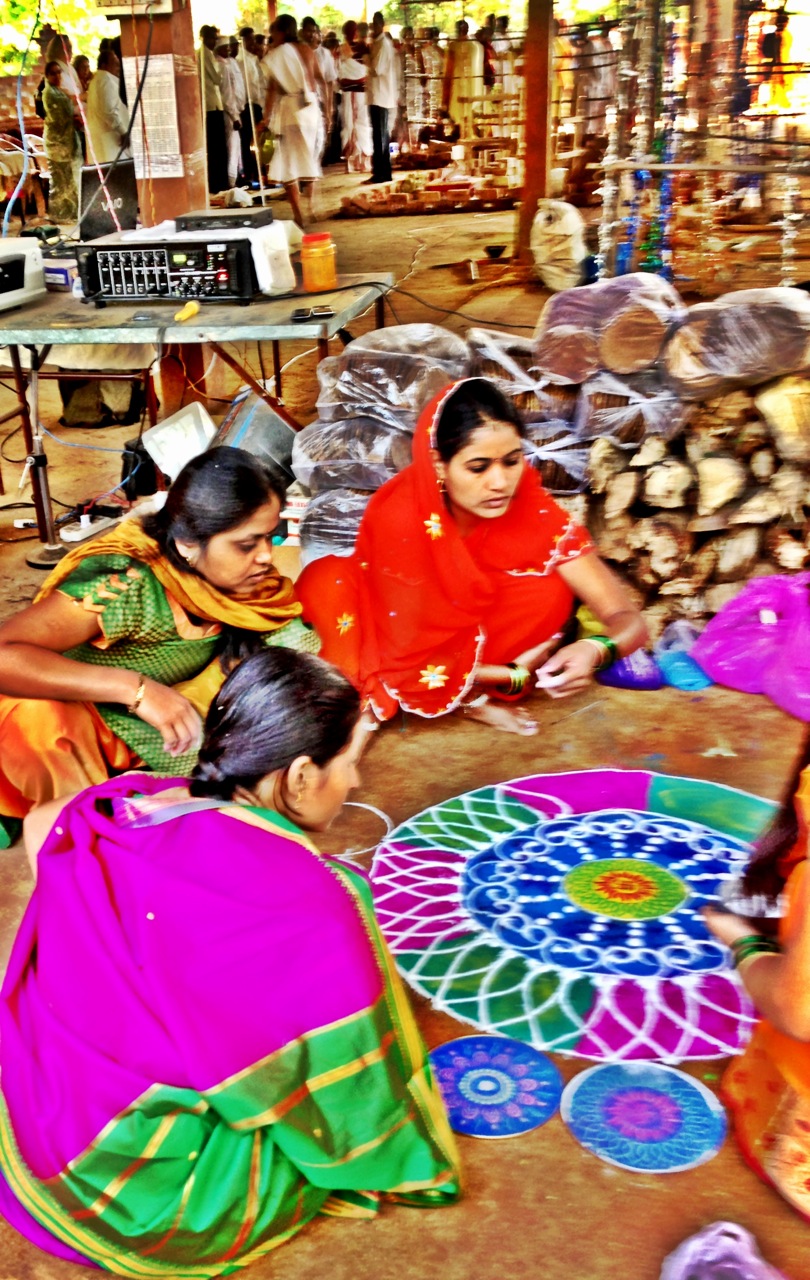
Here are a few pictures from their journey, taken by Bonnie.  Enjoy!


For more information about our Healing Pathways course, please visit http://www.compmed.umm.edu/pathways/index.asp.  Information about yoga and Reiki training, can be found at http://www.compmed.umm.edu/classes_yoga.asp.

Wednesday, October 31, 2012

Working Artfully within the Medical Center


Working Artfully within the Medical Center
By:  Lolly Forsythe-Chisolm and Alanna Berman

“Creativity is not a talent but a way of operating.”
~ John Cleese

Healthcare acts as a microcosm of our rapidly changing culture. The arts are working their way back into care and wellbeing. To recognize that Art can take many forms, the Integrative Care team assigned our first art intern to interview staff within the hospital that are doing their job in a creative manner. Having an appreciation of the arts can encourage a creative work environment as well as inspire value and meaning within any duty, career or job.

The framework and focus of this project was to ask ten University of Maryland Medical Center staff three questions:  How did you decide on your profession, what keeps you excited to come to work, and do you have a core belief which keeps you anchored in times of challenge or stress. These questions are important to ask ourselves in times of change both in our culture and our workplaces. Acknowledging what is important in our lives is the start of stress management and self-care.

Each story we heard from our coworkers was interesting and varied. To organize and present a small portion from each staff member, we decided break it down into “Ten lessons the Arts teach” from a list created by Elliot Eisner.

Good judgments about qualitative relationships. Harold Hardinger has been a nurse for 39 years. Harold came to trauma after time as a Navy Corpsman. Working in the Trauma Resuscitation Unit, he loves that it is different every day. He has to have good judgment and bring that to his “gut feeling” about how a patient is doing. His positive outlook and job satisfaction comes in part from the “feeling of saving a life.” Harold swims and enjoys time on his farm in order to de-stress.

Problems can have more than one solution. Dan Eisner is an Occupational Therapist and life coach at the hospital. Dan knew he did not want a desk job. His passion is “learning about the process of change.” Knowing that there is creativity in solving a problem or challenge, Dan has focused on including patients in their care using principles of emotional management and balance. Dan’s core belief is one of evolution, “we are on this plane to learn and evolve.” Dan spends time in nature, exercises and enjoys family and pets to reconnect and find balance.

Learning in the arts requires the ability and willingness to surrender to the unanticipated possibilities of the work as it unfolds. Brian Nelson is a Nurse Case Worker at the hospital. Brian came to nursing after recognizing the flexibility of hours and reliable pay. Brian enjoys that “no two cases are the same” as well as the challenge of helping families navigate unanticipated possibilities within discharge details. Brian has a core belief and pride in the teamwork that he feels at University of Maryland Medical Center. Brian is trained as a Massage Therapist and offers this service to co-workers during times of stress. Time with his family is a priority as Brian is a coach for his children’s sports teams and enjoys athletics.

The arts celebrate multiple perspectives. Brian Burke is a Clinical Education Specialist with experience as a Pediatric nurse at the Medical Center. After volunteering with The Leukemia & Lymphoma Society, Brian switched to nursing from a career in banking. Brian spoke about being able to see the big picture within the acuity of a situation or challenge. Having the ability to take a step back for multiple perspectives has offered Brian the chance to bring a unique compassion to his nursing and now his work within the Department of Clinical Practice and Professional Development. Admiring the “commitment and energy of nursing,” Brian uses a positive attitude and belief in nursing education to help “create an environment for the patients to which they do not otherwise have access while hospitalized.” As a core belief, Brian values relationships, working toward a goal and education. Time with his growing new family is a top self-care priority in Brian’s life.

The arts make vivid that neither words in their literal form nor number exhaust what we can know. Becky Halagarda is a Child Life Specialist with a Masters Degree in Social Work; she works in the Pediatric Hematology/Oncology Department at the hospital. Guiding children and families through difficult diagnoses, Becky knows that sometimes it is not the words that offer solace but the artistic expression. She often uses art and creativity to make the hospital world/equipment less threatening for children. She finds inspiration in her work when she experiences the “resilience in children and families.” She offered the reminder that the staff can share and tell stories in order to advocate for the creative care that treats the whole patient. Becky uses athletics as her self-care and her faith as a resource for balance in her life.

The arts teach that small differences can have large effects. Richie Stever is a Project Manager at the hospital. It is Richie’s job to “keep the hospital building healthy so patients and families can come to get healthy.” On the roof of the North hospital 14 stories high, Ritchie is responsible for the management and construction of a new air ventilation system which will make a difference in the hospital’s air quality. “Changing the building’s performance by constructing a new X Ray room in the front of the house and installing new ‘green’ equipment in the back of the house” is what keeps Richie excited about his work.  Fishing, biking and spending time with his kids is what helps him re-charge.

The arts teach us to think through and within a material. Chris Shippen is a nurse lactation consultant for the Division of Women’s and Children’s Health, working out of the Mother/Baby/Gyn Unit at the Medical Center. Chris has used her 30-plus years of nursing experience to think through some ways to creatively “process events which will affect the life of an Obstetrics (OB) nurse.” She teaches her OB student nurses to use journaling during their clinical work. Through her work lecturing about bereavement and breastfeeding, Chris finds satisfaction impacting lives in a positive manner. Her core beliefs in spirituality as well as the fact that there are so many opportunities to learn and grow in nursing keep her coming to work day after day. Chris’s self-care involves using Integrative Care modalities for herself as well as finding creative ways to offer relaxation to patients, families, and staff.

The arts help us learn to say what cannot be said. Reverend Susan Roy is the head of Pastoral Care Services at UMMC. Susan was planning to spend her career as a Lutheran Pastor in Parish Ministry. She “allowed faith to lead” her to serve in specialized ministry at the Medical Center. At the hospital, she has been inspired by the diversity of opportunity, the chance to meet new people, and the “unexpected” nature of her days. Susan uses stories from her faith to create poetry which helps her deal with challenges of a busy hospital. For Susan, writing poetry helped to “capture the rawness and find expression for strong feelings.” Susan’s faith forms her core belief in “compassion for all” and her self-care involves spending time with pets, friends, and family.

The arts enable us to have experience we can have from no other source. Robert Wright is a Volunteer for the Medical Center as a member of the Trauma Survivors Network. Rob’s motorcycle accident was seven years ago; he has been coming in as a visitor for patients for four years. Rob decided to become a volunteer when he realized that some patients did not have support and many would benefit from a perspective which differed from the medical focus. Inspiration comes for Rob when he is able to see a patient become motivated to move through great odds after hearing about his journey of daily hard work and triumph to get back to wellbeing.  Rob values the chance to tell this story and connect to others through the Trauma Survivors Network Support Group. During times of stress, Rob is reminded and “humbled” that he has “already been to flat line and there is nowhere to go but up from there.”

The arts position within the medical center acts as a symbol for what we believe is important as a culture. Mark Walker is a new nurse on Gudelsky 9 Surgical Intermediate Care Unit. He came to nursing after a career in Finance and Real Estate as a licensed Settlement Agent. Recognizing that the sales world taught him valuable people skills, Mark wondered if the job in Real Estate was the best place for his talents and time. He realized that nursing offered him the ability to “make a difference in someone’s life in a 12 hour shift.” With his core belief that “we are all part of the same stuff,” Mark has a commitment to teach nurses people skills, compassion and to include mind, body and Spirit to treat the whole person/patient. Each is an important aspect for what we value as a culture and a changing healthcare environment. For self-care, Mark spends time with family and makes time for meditation and spiritual inquiry.

Each of the staff members spoke of the importance of relationship both within family as well as work. They all also recognized that hospital-wide there is a range of opportunities and encouragement to continue to evolve and learn both from educational opportunities as well as from   each challenge. As we spoke to each staff member, it was evident that working artfully involves a willingness to imagine a bigger picture, to experiment, and to be flexible. Staff also all had a thorough recognition of resources available as well as a willingness to use thoughtful self-reflection when facing difficulty. Working artfully included a range of self-care habits which staff used to recharge and reconnect. Each also had a desire to pass on knowledge using communication as well as valuable training, and experience.

Within the rapidly changing culture and healthcare environment, self-care must be a priority. As a quick assessment, ask yourself these same three questions:  How did I decide on my career?  What keeps me excited? And what value system do I turn to when there is challenge?  Life stress often takes hold when we say “Yes” without first reconnecting to priorities. After taking this inventory, look for creative solutions or different ways to manage or share duties to work artfully within your position. Simply reconnecting to what is important can bring a new clarity and excitement to your daily tasks.

For more information about the Integrative Care Program at UMMC and their offerings, please contact Lolly at lforsythe@umm.edu.

SOURCE: Eisner, E. (2002). The Arts and the Creation of Mind, In Chapter 4, What the Arts Teach and How It Shows. (pp. 70-92). Yale University Press. Available from National Art Education Association Publications (NAEA). http://www.arteducators.org/advocacy/10-lessons-the-arts-teach.

Thursday, July 19, 2012

Easy Self-Massage Tricks for Upper Back Pain


Many people live with chronic upper back pain.  If it is due to muscular irregularities, you can try these easy self-massage techniques – all done with a tennis ball!


Using a wall is the easiest and most convenient way to use a tennis ball to massage your back.    Lean in to it gently and roll around until you find your tight areas.  Press in on them with as much or little press as is comfortable for as long as is comfortable. 
The ball can go anywhere on your back - EXCEPT your spine.    
Alternative placement:  Place the ball between you and a firm-backed chair.
Again, move the ball around anywhere on your back, avoiding the spine.
No chair or wall?  Try placing the ball in a sock and pulling it around on your back using both hands.  This is a little more difficult than the chair or the wall, but still feels really good.


A fourth method is to use the floor.  This would be the same positioning as the wall and chair, only horizontal instead of vertical.

The most important thing to remember is listen to your body.  Press in when it feels good and lighten up if it hurts.  If you are not sure, ask your professional massage therapist or your doctor.

Please visit our massage therapist in our clinical practice, the University of Maryland Center for Integrative Health & Healing, for more tips and a healing massage.
_________________________________

**Please note:  This does not take the place of a doctor's advice and is only to be used as a self-help tool.  Please check with you doctor if you have any concerns about your health or well being.**