Monday, November 18, 2013

Butternut Squash with Onions and Pecans


Serves 8

Ingredients
            1 cup chopped pecans                                                      
            3 tbsp grass-fed butter
            1 large onion, chopped
            2 ¼ lb butternut squash, peeled, seeded, cubed
            Celtic sea salt & black pepper to taste                            
            3 tbsp chopped fresh parsley


Directions
            Melt butter in a large, heavy skillet over low heat; add onion, and sauté for about 15 minutes, until very tender. Stir in squash and cover the skillet. Meanwhile, place pecans on an ungreased baking sheet. Toast at 350 degrees for 5 to 8 minutes. Continue cooking and stirring squash until tender for about 15 to 20 minutes. Season with salt and pepper. Stir in pecans and chopped parsley. Enjoy!

Nutrition facts (per serving): 100 calories, 4.5g fat, 86mg sodium, 17g carbs, 3g fiber, 1.5g protein

Recipe courtesy:  Erin Peisach, RD, LDN (read Erin's bio here)
To make an appointment with Erin, please call the clinic at 410-448-6361.

Monday, November 11, 2013

Gluten-Free Pumpkin Muffins

Makes 18 muffins

Ingredients
½ tsp baking soda         
4 eggs
½ tsp sea salt                
1cup pumpkin puree
1 cup almond flour       
¼ cup oil
1/3 cup coconut flour   
1/3 cup honey
½ tsp nutmeg                
8 drops liquid stevia 
½ tsp cinnamon             
½ cup of chopped walnuts
½ tsp ginger

Directions
Preheat oven to 350F. Blend all of the dry ingredients together. Blend all of the wet ingredients together. Add the wet ingredients into the dry and mix well. Spray a muffin tin with nonstick cooking spray. Add the batter to the pan. Bake for 30 minutes or until browned.

Nutrition facts (per muffin): 140calories, 10g fat, 10g carbohydrate, 2g fiber, 4g protein

Recipe courtesy: Erin Peisach, RD, LDN (read Erin's bio here)

Tuesday, October 8, 2013

Supplement Highlight: Nutrametrix OPC-3

Written by:  Erin Peisach, RD, LDN

OPC-3, which is short for oligomeric proanthocyanidins, is a highly bio-available, potent antioxidant supplement that is now offered for patients at our patient clinic. This exciting supplement is up to 20-times more powerful than vitamin C and 50-times more powerful than vitamin E in its antioxidant capacity. What exactly is in this supplement that makes it so effective? It contains a combination of bilberry, grape seed, red wine, and pine bark extracts, as well as citrus extract bioflavonoids. Not only will OPC-3 neutralize harmful free radicals in the body, but it may also help maintain joint flexibility, improve cardiovascular health, and reduce inflammation.

A 2008 study published in Angiology found that OPC-3 daily supplementation over a 2-month period lowered all major cardiovascular risk factors compared to a placebo. Blood pressure, total cholesterol, and fasting blood glucose were reduced, endothelial function was improved, skin microcirculation was enhanced, and C-reactive protein dramatically decreased by 52.1%.

This supplement comes in a powder that is mixed with water, creating an isotonic solution that is consumed on an empty stomach. Don’t worry…it tastes like grape juice! The science behind this form of supplementation is that the nutrition is highly bioavailable and immediately absorbed into the body, bypassing the need for high amounts of stomach acid or digestive enzymes. It is reported that some tablet supplements are only 10-40% absorbed compared to 90-95% absorption for isotonic supplements. In a 2009 study published in Phytotherapy Research, they found that the isotonic OPC-3 compared to the tablet OPC-3 significantly accelerated the bioavailability of flavonoids. At 10-minutes post-consumption, the isotonic OPC-3 significantly decreased the subjects’ reactive oxygen species six times greater than the tablet form and it remained significantly greater throughout a four hour period.

This safe, highly effective antioxidant supplement may provide numerous benefits to your health. Ask one of our clinicians about OPC-3 at your next visit and find out if it may be an appropriate supplement for you!  Call us at 410-448-6361 to schedule your next appointment or ask questions.

References:

1. Cesarone MR, Di Renzo A, Errichi S, Schonlau F, Wilmer JL & Blumenfeld J. (2008) Improvement in circulation and in cardiovascular risk factors with a proprietary isotonic bioflavonoid formula OPC-3. Angiology. 59(4), 408-414.


2. Cesarone MR, Gross MG, Di Renzo A, Errichi S, Schonlau F, Wilmer JL & Blumenfeld J. (2009). Accelerated antioxidant bioavailability of OPC-3 bioflavonoids administered as isotonic solution. Phytother Res. 23(6), 775-777.

Friday, October 4, 2013

Food Reactivity - Testing & Treatment

Did you know that our clinic specializes in food sensitivity testing and treatment? Erin Peisach, the clinic’s Registered Dietitian, is a Certified LEAP Therapist (CLT). What is LEAP? Quite simply, it is a diet program designed to help people suffering from food sensitivity symptoms. Symptoms can range from bloating, diarrhea, and excessive gas, to eczema, chronic migraine, fibromyalgia, irritable bowel syndrome, and chronic muscle and joint pain. The tricky part is trying to identify the food sensitivity that may be provoking these symptoms. Food sensitivities are dose-dependent, meaning small amounts of the food may not cause a problem, but larger amounts will. They can also have a delayed response in the body, meaning symptoms may not be experienced immediately after ingestion, but anywhere from 4 to 96 hours later. Because of these two factors, food sensitivities are extremely difficult to diagnose.

In the past, clinicians have helped patients try to identify food sensitivities by using a food elimination diet followed by a food reintroduction challenge. We call this the “guess and check” method because there is no sure-fire way to know that the diet is void of all reactive foods. For instance, one person may be sensitive to dairy, gluten, fish, peanuts, and citrus, some of the most common food triggers, while another person may be sensitive to rice, pears, lamb, and olives, some of the least common food triggers. Essentially, there is no perfect hypoallergenic diet for the entire population because each person’s body is unique.

Alternatively, some clinicians have used blood tesing to help diagnose food sensitivities, including ELISA IgG and ALCAT. While these tests can be helpful in identifying food triggers, they also have flaws. In particular, the IgG test exclusively quantifies the IgG response to specific foods and does not measure all of the other ways the body may react to a trigger food. Because of this limitation, the test results may show you that unsafe foods are actually safe.  As with any diagnostic test, it is important with food sensitivities to use a sensitive and specific testing method to guide therapy.

The LEAP program utilizes a test called Mediator Release Test (MRT).  Rather than relying on IgG, it measures the release of chemical mediators of food sensitivity symptoms by immune cells.  MRT is becoming the gold-standard test in the industry, with studies supporting its accuracy and reliability.


Erin uses the results of the MRT to put together an individualized eating program to improve your symptoms, heal your gut, and improve your health. Contact the clinic today by calling 410-448-6361 to schedule an appointment and find out if this is the right program for you. 

Friday, August 16, 2013

CIM's 2013 Health & Wellness Conference

"Gentle Yoga to Start the Day"
workshop led by Bonnie Tarantino, MFA
The University of Maryland Center for Integrative Medicine’s second annual Health & Wellness Conference was held on Saturday, May 4, 2013 at the Hilton Baltimore.  More than 350 health care professionals and lay people gathered to hear Mark Hyman, MD, doctor, author, and advisor to the Dr. Oz Show, speak about how society can influence health and how we can be a part of the wellness movement.  More than 20 leading experts in Integrative Medicine led workshop sessions throughout the day, and the lunchtime panel and plenary sessions rounded out the day, giving the audience the opportunity to interact with speakers.

Kevin Chen, PhD led a morning QiGong workshop outside
“It was a wonderfully executed conference,” said one attendee.  “Each session was better than the previous.  I look forward to attending next year and spreading the word about it to others.” 

From nurses, social workers and yoga practitioners, to physicians, pharmacists and therapists, to the general public, the Conference catered to the interests of health and wellness enthusiasts of all kinds.  This year, in addition to Continuing Education credits for many health care professions, the Conference offered a Pain Management track that was approved for Continuing Medical Education credits, drawing two-thirds more physicians than at the first conference.

Overall, 97% of attendees who responded to the post-conference survey reported that the Conference met or exceeded their expectations, and 56% said their main goal for attending the conference was to gain knowledge to share with others.  “I will share what I learned at the Conference with my patients when they press me for pain meds,” said one participant who asked to remain anonymous.

In a survey comment, another attendee wrote, “I felt uplifted at the Conference.  It was inspiring to see speakers and presenters who strongly projected their desire to help others.” 

Dr. Mark Hyman
More than 20 experts in health care and integrative medicine led workshops throughout the day on topics such as nutrition, meditation, yoga, spirituality, environmental health, Ayurveda, manual medicine, acupuncture, and more.  Participants were able to select one of three to five workshops from each of the four sessions and were united in one room for Dr. Hyman’s keynote lecture, the lunch panel on “Changing the Paradigm of Health Care,” and the plenary session addressing “Pain Management in the 21st Century” led by the Center’s Associate Director Dr. Delia Chiaramonte.

“Are the social threads that connect us as important as the genetic threads?” asked Mark Hyman, MD, doctor, author, Functional Medicine expert, and advisor to the Dr. Oz Show, in his keynote address “Social Ecosystems and Chronic Disease.”  Through his work, he has discovered that our social environment and connections can be a major influencer over our health.  In an inspiring presentation, Dr. Hyman explored how the community can be part of the medicine and part of the cure.

Jay Perman, MD, President of
University of Maryland, Baltimore
“All of us in healthcare need to embrace our partners across the professions if we are going to serve patients and serve the needs of the public properly,” said University of Maryland’s President Dr. Jay Perman in his remarks that introduced the lunchtime panel.  Moderated by the Center’s Director Dr. Brian Berman, a panel of health care visionaries came together to give the audience an intimate look at how they have seen and helped “Change the Paradigm of Health Care.” 

Panel (L to R):  Dinae Hoffmann, Thomas Scalea, MD, Brian Berman, MD, Lori Knuston, RN
Dr. Thomas Scalea, physician-in-chief of the University of Maryland R Adams Cowley Shock Trauma Center, stated, “It’s not so much about what it is we do – it’s about the total care package that we provide the people … we will continue to push the envelope that is about the total care of the patient and measuring the effect of what it is that we do.” 

Lori Knutson, RN, a nurse who helped make dramatic changes in the healthcare system in the Midwest, shared her story, and Diane Hoffmann, director of the health care law program at the University of Maryland Francis King Carey School of Law, addressed how political and legal changes affect health care, such as licensing practices.  Half an hour of questions from the audience gave participants a chance to interact with the panel.

Delia Chiaramonte, MD
In a post-lunch plenary lecture, Delia Chiaramonte, MD, Associate Director and Director of Education at the Center for Integrative Medicine, tackled the topic of “Pain Management in the 21st Century,” analyzing what we do and what we can do differently, such as looking at the whole person.  “We can’t really talk about pain, particularly chronic pain, without thinking about all kinds of things…like people’s emotions, their genetics, their social situations, like how happy they are in their life, the context of the pain…” said Dr. Chiaramonte.  A running theme throughout the 
day, Integrative Medicine takes a team approach and looks at the whole person – for better health and wellness.

Friday, June 14, 2013

What to do if you are bitten by a tick

WHAT TO DO IF YOU ARE
BITTEN BY A TICK
By:  Dr. Kalpana Shere-Wolfe, University of Maryland School of Medicine
If you are bitten by a tick you may or may not need to be treated based on the description of the tick and how long it has been attached.   
1. Remove the tick if you can following the instructions below:
a. Use fine tweezers to grasp the tick as close to the skin surface as possible.
b. Pull backwards gently but firmly, using an even, steady pressure. Do not jerk or twist.
c. After removing the tick, wash the skin and hands thoroughly with soap and water.
2. You do not need to keep the tick. Please note the following:
a. Its color and size
b. If it was attached to your skin or just resting on your skin
c. If it was big, round, and full of blood. 
3. You do not need to be tested for Lyme disease at this time.  Even people who become infected will not have a positive blood test until approximately two to six weeks after the tick bite.
4. If the tick was not attached, easy to remove or just walking on the skin, and was still flat, tiny and not engorged with blood  or not attached for ≥ 24 to 36 hours when it was removed it could not have transmitted infection.  In this case you do NOT need to be treated. 
5. You may need to be treated if the following are true:
a. The attached tick looks like an adult or nymphal  blacklegged (I. scapularis) deer tick.  Ticks that are brown and approximately the size of a poppy seed or pencil point are deer ticks. These can transmit Lyme disease. (See picture below for comparison with the dog tick or lone star tick.)
b. Tick is estimated to have been attached for ≥ 24 to 36 hours (based upon how engorged the tick appears or the amount of time since outdoor exposure)
References: CDC, IDSA Practice Guidelines for Lyme Disease


Tuesday, January 8, 2013

12 Days in India


Before the holidays, 14 Reiki masters embarked on 12-day adventurous and transformative trip to India, led by Bonnie Tarantino, Director of the Healing Pathways program here at the University of Maryland Center for Integrative Medicine.  Nurses from R Adams Cowley Shock Trauma Center at the University of Maryland, the University of Maryland Medical System, Johns Hopkins Hospital, and Walter Reed Hospital attended, and were joined by social workers, massage therapists and yoga instructors.  While there, the group received training in meditation, yoga and advanced Karuna Reiki.  

Many of the travelers say a highlight of the trip was attending the second international yoga conference at the Paramanand Institute of Yoga Sciences and Research.  More information about the conference can be found here:  http://www.paramyoga.org/inner.php?page_id=167&page_name=Second+International+Yoga+Conference&main_page_id=50

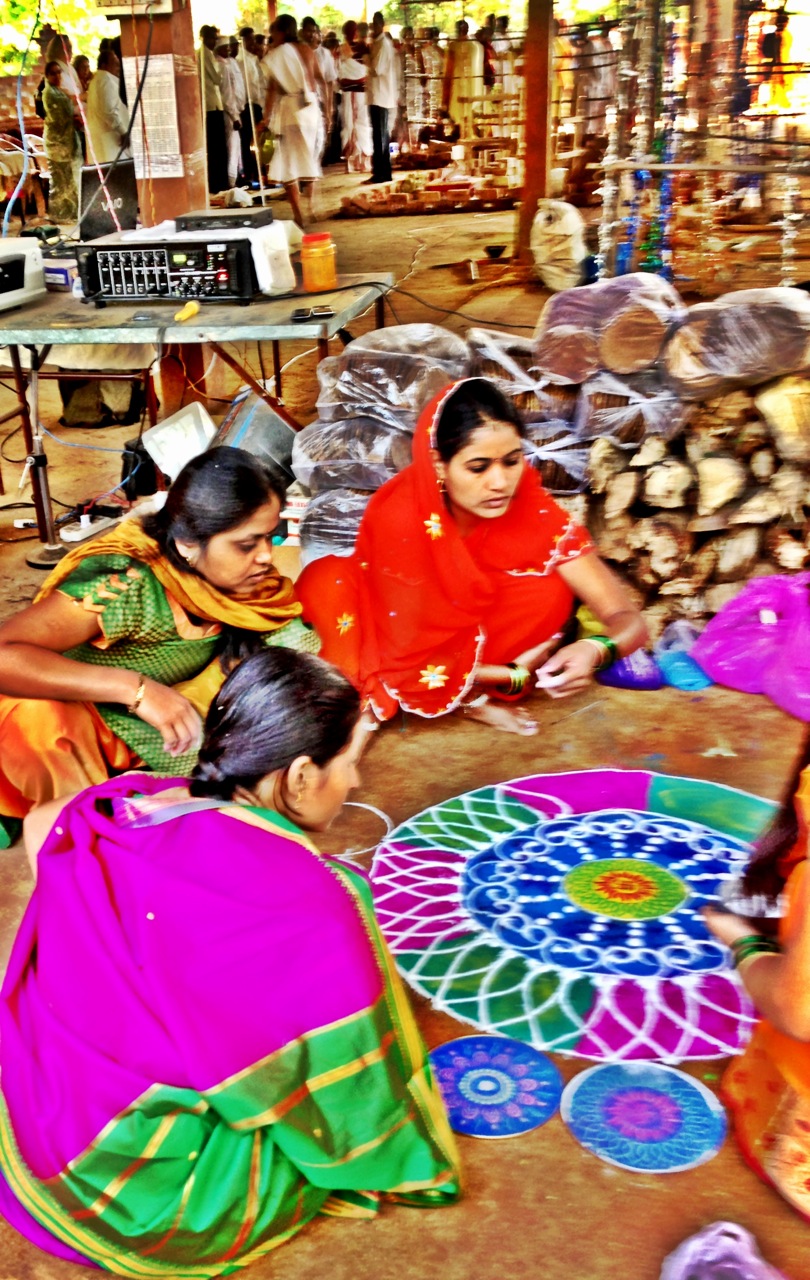
Here are a few pictures from their journey, taken by Bonnie.  Enjoy!


For more information about our Healing Pathways course, please visit http://www.compmed.umm.edu/pathways/index.asp.  Information about yoga and Reiki training, can be found at http://www.compmed.umm.edu/classes_yoga.asp.